


Big Rig Savings
crownsource
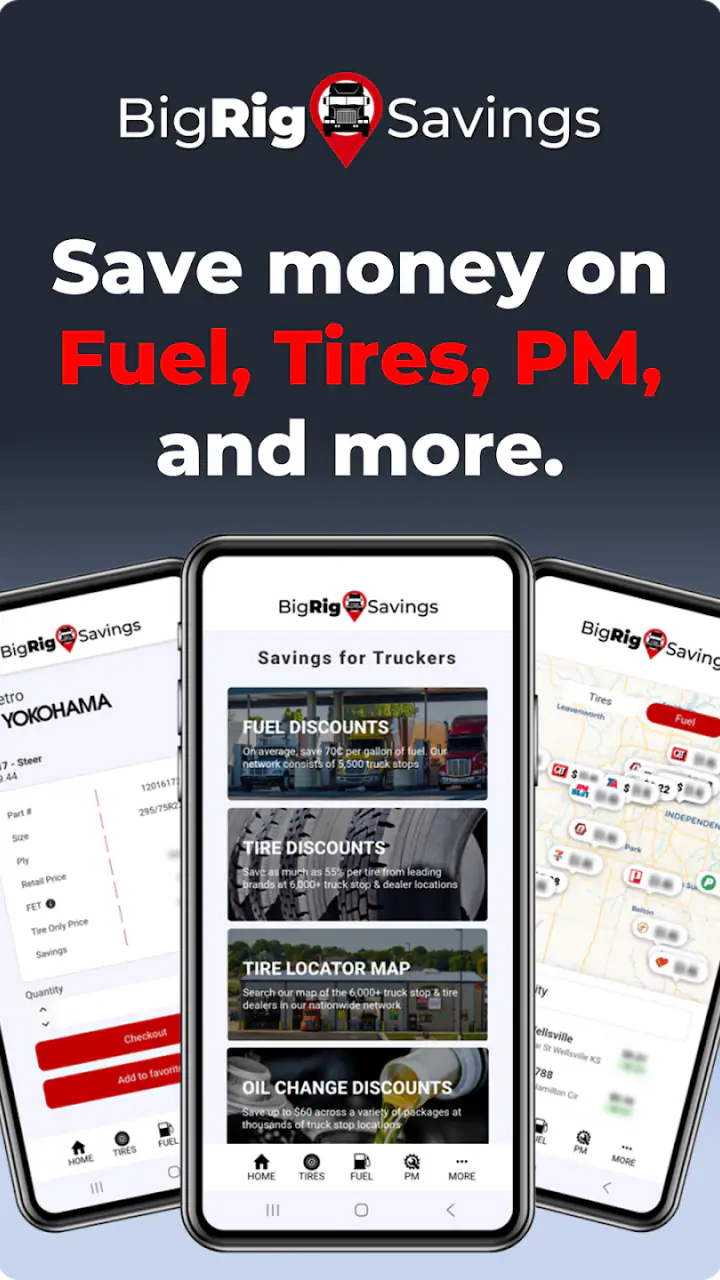
Big Rig Savings is the kind of app I would judge by one practical question: does it help a driver or fleet make better decisions during an ordinary week on the road? As a free Auto & Vehicles app from crownsource, it is aimed directly at truckers and fleet operators rather than everyday passenger-car drivers. My overall impression is that its value comes from keeping savings-related thinking close to the driving routine, but it works best when treated as a focused companion instead of a complete replacement for every tool a professional driver already uses.
The audience is clear from the start. If you spend long hours moving a heavy truck, manage several vehicles, or regularly make choices involving fuel and operating costs, a dedicated app can be more useful than a general motoring application. Big Rig Savings has a 3.7 average from around two dozen ratings and has passed ten thousand installs, so it has attracted a modest but real group of users. That is enough to make it worth examining, while also suggesting that I would personally test it on a short run before building an important business process around it.
How Big Rig Savings fits into a trucker's working day
The strongest idea here is specialization. Most driving apps are designed around directions, traffic, vehicle maintenance, or consumer fuel searches. A trucker has a different set of pressures: a stop has to fit the route, a saving has to be worthwhile after considering detours, and a decision that looks small at the pump can matter more when a vehicle is working continuously. The app's focus on big-rig savings gives it a more relevant starting point than a standard car-oriented utility.
I would use it as part of a repeatable routine rather than opening it randomly. Before leaving, I would check the planned route and identify the points where a fuel or operating-cost decision might make sense. During a break, I would compare the practical benefit of stopping there with the time and distance involved. After the trip, I would look back at which choices actually helped. That simple habit is more valuable than chasing every possible discount without considering the route.
The real strength is decision discipline, not magic savings. An app cannot make an expensive detour sensible, and it cannot turn an unsuitable stop into a good one. What it can do is put savings information in front of the person who is already thinking about the next stop. For an owner-operator, that can encourage more consistent choices. For a fleet, it can support conversations about how drivers select stops and where costs are leaking.
Related News

Why WhatsApp Messenger Still Makes Everyday Communication Feel Easy

Jurassic World: The Game Is the Better Dino Tycoon for Strategic Players

Threads in Real Life: Who Should Join, Lurk, or Leave

How SHEIN Turned Shopping Into an Endless Content Feed

How to Make Fortnite Feel Smarter on Mobile

Should You Switch to Microsoft Outlook on Mobile?
Why a truck-focused approach matters
A general fuel app often assumes that the nearest station is the most useful one. That assumption is weak for a tractor-trailer. Access, turning space, route direction, parking, and the time required to enter and leave can matter just as much as the displayed price. Big Rig Savings is more appealing because its purpose is connected to the realities of heavy-vehicle travel, even though I would still verify every stop against the route and the vehicle's needs.
That last point is important. I would not interpret a listed opportunity as an automatic instruction to change course. A small price difference may disappear after extra miles, idle time, or a difficult entrance. My best practice would be to use the app for shortlisting options, then apply common sense: Is the stop already near the route? Can the rig get in and out comfortably? Does the timing fit the driver's break? Is the saving meaningful for this particular load?
This makes the app especially useful for drivers who want a second layer of judgment. It is less compelling for someone who only wants turn-by-turn navigation or a simple map of nearby stations. Those users may prefer a navigation app with truck routing or a conventional fuel finder. Big Rig Savings earns its place when savings are a regular part of the driving decision, not when the user wants one application to do everything.
Gallery
A realistic use case on a long haul
Imagine an owner-operator preparing for a multi-day run. The route is already planned, the truck has enough fuel to reach several possible stopping points, and the driver wants to avoid paying more than necessary without losing time. Before departure, the driver can use Big Rig Savings to think through likely stopping areas rather than waiting until the tank is nearly empty. That creates a buffer: if the preferred option is busy, inconvenient, or no longer practical, there is still time to choose another.
At the next break, the driver can reassess instead of following the original plan blindly. Weather, traffic, fatigue, and the actual remaining range may change the best choice. This is where I see a non-obvious benefit: planning earlier reduces pressure. A driver who waits until the last moment is more likely to accept the first available option, while a driver who has considered alternatives can make a calmer decision.
For a small fleet, the same workflow can be used at a broader level. A manager might encourage drivers to compare savings opportunities with route efficiency, then discuss recurring patterns at the end of a week. The app should not be treated as an accounting system unless it demonstrably supports the company's required records, but it can serve as a practical prompt for better cost awareness.
Small habits that make the app more useful
My first tip would be to check it before the tank becomes a problem. Savings tools are most useful when there is room to choose. If the driver is already close to empty, a theoretical better option may be irrelevant. Planning with a comfortable margin also makes it easier to reject a stop that creates a difficult maneuver or an unnecessary detour.
Second, I would compare the total trip effect rather than focusing only on a single price. A stop that looks attractive can lose its advantage if it adds distance or disrupts a scheduled break. For a heavy vehicle, the useful question is not simply “Where is the lowest price?” but “Which reasonable stop gives me the best overall result?” That distinction is easy to miss in any savings-focused app.
Third, I would use the app to build personal knowledge over time. Drivers often develop strong instincts about reliable stops, but those instincts can become outdated when routes change. By checking options consistently and noticing which choices fit real trips, a driver can create a more informed routine. This is a stronger use than opening the app only when a friend mentions a bargain.
Where the experience can become frustrating
The main limitation is that savings information is only useful when it matches the driver's immediate circumstances. Road conditions, station access, vehicle size, company policy, and timing can all override a promising result. I would therefore avoid presenting the app as an authority. It is a planning aid, and the driver remains responsible for checking whether an option is safe and practical.
There is also a trade-off between specialization and coverage. A focused trucker tool may feel more relevant than a general consumer app, but professional drivers often need several kinds of information at once: navigation, parking, compliance, maintenance, expense tracking, and communication with dispatch. Big Rig Savings does not remove that need. If your priority is a single all-purpose dashboard, adding another focused app may feel like extra friction.
Fleets should be particularly careful about expectations. A manager may want centralized reporting, driver accounts, approval rules, or detailed cost history. I would not assume that a savings-oriented app provides those business controls simply because it mentions fleets. Before rolling it out to a team, I would test the actual workflow with one vehicle and see whether it fits the company's record-keeping requirements.
The rating also affects my recommendation. An average of 3.7 is neither a warning to avoid it nor a guarantee that every driver will enjoy it. With only around a dozen written reviews, the public feedback is relatively limited. I would read the current store comments and, more importantly, try the app on routes I already know. Familiar roads make it easier to tell whether the suggestions are genuinely helpful or merely interesting.
Who should install it, and who should skip it?
I think Big Rig Savings is best for owner-operators, independent truckers, and small fleet managers who actively want to improve everyday operating decisions. It is also a sensible trial for a driver who feels that fuel planning has become reactive. The free price lowers the barrier to testing it, and the Everyone content rating makes it suitable from an age-classification standpoint for a broad audience. Its minimum operating requirement of Android 4.4 also makes it accessible to people using older Android hardware.
I would be more cautious if you drive only a passenger car, rarely travel beyond familiar local roads, or already have a fleet platform that handles savings and route planning in one place. In those cases, the extra app may not add enough value. It is also not the right choice for someone expecting guaranteed discounts or automatic cost reduction. The benefit depends on how thoughtfully the information is used.
Drivers should also consider their phone habits. If you prefer to keep every decision inside a navigation application, switching between tools may be annoying. My workaround would be to review savings possibilities while parked, during a planned break, or before departure, rather than trying to interact with the app while driving. That approach protects attention and turns the app into a planning tool instead of a distraction.
Version, availability, and long-term expectations
The current version is 5.0.0.0, and the app was released on July 12, 2023. Those details matter less than the day-to-day experience, but they give prospective users a useful starting point when deciding whether their phone is suitable. I would install it on the device used for route planning, then spend a few trips checking how well it fits existing habits before relying on it for important savings decisions.
Because the app has a relatively small community compared with major navigation products, I would keep expectations realistic about how much outside guidance is available. That does not make it unhelpful; it simply means the best evaluation is personal. A professional driver can quickly tell whether the app supports the routes, stops, and decisions that matter in their own work.
One practical test is to compare three situations: a familiar local run, a longer trip with several possible stops, and a route where time matters more than price. If Big Rig Savings helps you make a better choice in at least the second situation without creating extra hassle, it has probably earned a place in your toolkit. If it adds work without changing the decision, there is little reason to keep it open.
My final view
Big Rig Savings has a clear purpose and a worthwhile audience. I like that it treats truck-related savings as a distinct problem rather than forcing heavy-vehicle users into a passenger-car mindset. Its best value appears when a driver plans ahead, compares the full cost of a stop, and uses the app to reduce last-minute pressure. That is a modest role, but it is a practical one.
At the same time, I would not call it a complete solution for professional transport. It cannot replace careful route judgment, a suitable truck navigation system, company procedures, or proper expense records. The app is strongest as one focused layer in a larger routine, and weaker when users expect it to manage every part of a fleet's operation.
My recommendation is therefore specific: try Big Rig Savings if fuel and operating-cost choices are part of your daily trucking decisions, especially if you are an independent driver or run a small fleet. Test it on known routes, use it while parked, and judge savings against time, access, and distance rather than price alone. If that process produces better choices without slowing you down, the free app is easy to justify. If you mainly need navigation or centralized fleet management, a more comprehensive alternative will probably serve you better.
For me, the app's thesis is simple and convincing: better savings begin with better timing and more deliberate stops. It does not promise to eliminate the complexity of life on the road, but it can help put that complexity in a more manageable order. That makes Big Rig Savings a useful specialist app for the right trucker, provided its information is treated as guidance and not as a substitute for professional judgment.
FAQs for Big Rig Savings
What is Big Rig Savings, and who is it designed for?
Big Rig Savings is a savings and discount-focused app aimed primarily at truck drivers, owner-operators, and other people working in the trucking industry. It can help users discover deals, promotions, and potential savings on products or services relevant to life on the road. Before downloading, check whether the available offers apply to your location, vehicle type, and professional status.
How can Big Rig Savings help truck drivers save money?
The app is intended to bring together discounts and special offers that may reduce everyday trucking expenses, such as fuel, food, maintenance, equipment, travel, or other driver-related purchases. The actual value depends on the participating businesses and current promotions. Always review each offer’s terms, expiration date, eligibility rules, and redemption instructions before making a purchase.
Is Big Rig Savings free to download and use?
Big Rig Savings may be available as a free download, but users should verify the current pricing information on the official Google Play Store or Apple App Store listing. Some deals may have separate conditions, membership requirements, or restrictions even when the application itself costs nothing. Check for optional subscriptions, in-app purchases, and account-related charges before completing registration.
Does Big Rig Savings require an account or personal information?
Depending on the app’s current features, you may need to create an account to save offers, access personalized promotions, or redeem certain benefits. Registration can involve details such as an email address, phone number, location, or trucking-related information. Before signing up, review the privacy policy and permissions so you understand how your information is collected, used, and shared.
Can I use Big Rig Savings on the road without a reliable internet connection?
The app may require an internet connection to load current promotions, update participating locations, verify eligibility, or process offers. This is important for drivers traveling through rural areas or places with weak mobile coverage. Before starting a trip, open the app and review any relevant deals in advance. Also confirm whether offers can be saved or accessed offline.
Pros
- Helps compare prices across multiple truck stops and fuel stations.
- Useful for planning refueling around long-haul routes.
- Can highlight potential savings for frequent commercial drivers.
- Simple interface makes price information quick to scan.
- May reduce fuel expenses when used consistently before stopping.
Cons
- Coverage may vary significantly by location and participating stations.
- Prices can change before you arrive
- reducing the displayed savings.
- Requires internet access for the most current pricing information.
- Savings may not offset route detours or extra driving distance.
- Less useful for drivers outside the app’s supported regions.


